
So, there you are, sitting in front of your screen, trying to figure out what F2F is, why everyone is talking about it, and why you haven't heard of it until now. Relax — we're here to explain everything as if chatting with a friend over coffee: simple, clear, and with a bit of humor. F2F isn't a mysterious acronym for some secret code. No, it doesn't stand for Face-to-Face. It means Friend-to-Friend, and this technology will change your idea of privacy and security on the Internet. So buckle up, we're diving into the world of F2F — and it's going to be fun.
F2F: What is it, exactly?
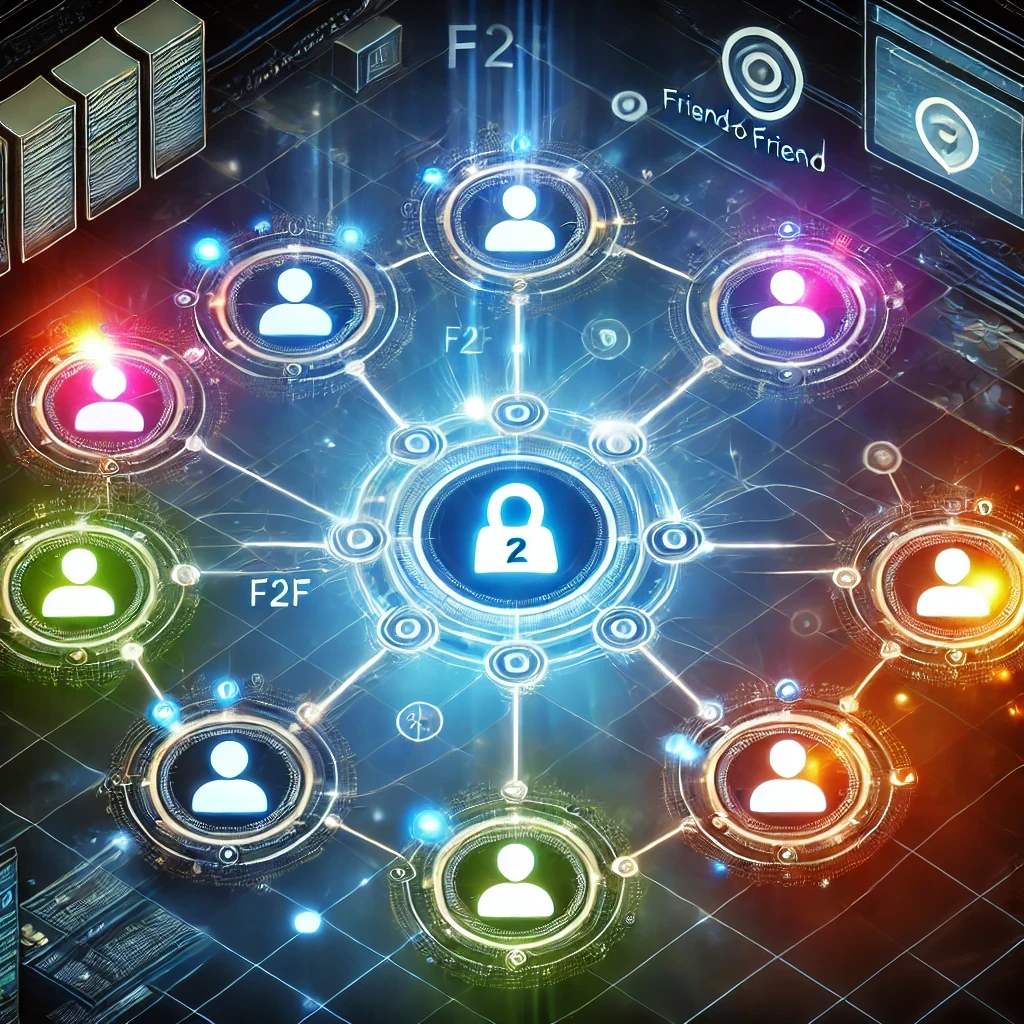
Let's start with the basics. F2F (Friend-to-Friend) is a variant of P2P networks (Peer-to-Peer), which many may already know from things like torrents. The difference is that in P2P everyone can see everyone in the network structure, whereas in F2F everything happens only between "friends" — hence the name. Only you and your trusted friends can see who is doing what.
Imagine a private party: No strangers are allowed in, only reliable people. It's like your private Telegram chat, but with a security system that might even make hackers break a sweat.
F2F algorithms: How does it work?
If you think it's going to get complicated now with technical diagrams and formulas, you're wrong. F2F's algorithms are like your grandma's secret recipe: complex, but absolutely understandable once you get it. So, let's go!
1. First, you make friends
F2F is built on the idea that you don't interact directly with all users in the network, but only with those you trust. These are your "friends" in the system. So you don't interact with strangers who might bring viruses or simply look suspicious. Only vetted pals.
2. Key exchange – like a handshake, but digital
When you add a friend in the F2F network, an exchange of cryptographic keys takes place. It's like saying: "Okay, you're my friend, now we can exchange files securely." Thanks to that key, no outsider can access your information.
3. Your friend knows a friend, and so on
Once you're connected to a friend, they can share information about their friends. That doesn't mean you're instantly connected to all your friend's friends, but a "chain of trust" emerges. Think of it like a LinkedIn recommendation—only here each "handshake" is a step toward secure data transfer.
4. Encryption – not just for secret agents, but for everyone
Every communication and data exchange in F2F is fully encrypted. That means without the correct key everything looks like a jumble of unreadable characters. No data leaks, no eavesdropping.
5. Direct file transfer: no middlemen!
This is simple: want to send a file to your friend? It's sent directly to them without passing through any servers or third parties. No sketchy people on a server can view your file. Everything is secure and private.
Benefits of F2F: Why is it cooler than regular P2P networks?
Okay, you now understand that F2F is like a closed party where only "insiders" are allowed. But why is that so brilliant? Here are a few reasons that will convince you to join this system right away.
1. Top-level security
If you've ever worried that the files you send over the Internet might be at risk, F2F is made for you. Everything is encrypted and only your friends have access. It's like locking all the doors of your house and giving keys only to your closest friends.
2. No middlemen
We live in an age where data has become the new currency and everyone wants a piece of it. F2F removes all third parties that might try to collect information about your activities. No servers, no nosy advertisers showing you targeted ads on Facebook afterward.
3. Chain of trust
F2F networks create a "chain of trust" where everyone is verified through another friend. It's like a secret society where everyone knows each other, but strangers aren't admitted. The more friends you have, the more securely and quickly you can exchange data.
4. ISPs are out
F2F works directly between users, which means your Internet provider can no longer see what you're doing. It's like becoming invisible to everyone except your friends.
5. Anonymity
And now perhaps the most important point for everyone tired of being constantly watched: F2F allows you to remain completely anonymous. You can exchange data without worrying that someone is tracking your activities. This technology is for everyone who values their freedom on the Internet.
Where is F2F used?
Now that we've covered the basics, let's look at where this technology is used. You'll be surprised, but F2F is already being applied in various areas.
1. File-sharing networks
That's the classic case. If you want to share something important with someone without anyone else seeing it, F2F is the perfect choice. Forget torrents with dubious trackers — here everything runs securely and encrypted.
2. Next-generation social networks
There are already some social networks built on the principles of F2F. These are closed platforms for communication with friends and family where you know exactly who sees your messages. No random users and no annoying ad algorithms.
3. Anonymous chats
If you want to chat with your friends without anyone else eavesdropping, F2F is the perfect solution. All chats are encrypted and protected from prying eyes.
Disadvantages of F2F: Is there a downside?
To avoid sounding like we're singing nothing but praises, we should admit: every technology has weaknesses, and F2F is no exception.
1. Only for friends
For those used to quickly and easily interacting with strangers online, F2F may feel a bit too "closed." You can't just interact with new people unless you're connected via mutual friends.
2. Not yet mainstream
F2F technologies aren't yet developed enough to be used daily by millions of people. Yes, it's great for secure file sharing among friends, but it will take work before it becomes mainstream.
Conclusion: Why F2F is the future
In a world where privacy is becoming increasingly rare, F2F could be a savior for those who value their online privacy. This technology makes it possible to operate anonymously, securely, and with trust within a closed network.
Even though F2F is still in its infancy, it has enormous potential. Already, F2F shows that it's possible to create a secure and private digital environment where only those you trust have access. So the future looks safer and more private, thanks to F2F!